For years, the story of African creativity at Cannes Lions was mostly a story about attending. This year, it’s a story about deciding.
Cannes Lions — advertising’s most prestigious global awards, the show every agency on earth quietly measures itself against — announced its 2026 jury line-ups this spring. Buried in a list of hundreds of names from six continents were five Ghanaians, sitting on official juries across genuinely different disciplines, not clustered in a single “diversity” category:
- Norkor Duah, CEO of MullenLowe Accra, on the Health & Wellness Awarding Jury
- Sharon Mills, Lead Creative Consultant at SMC Consulting, on the Shortlisting Jury
- Colin Yesutor, Creative Director at Havas Africa, on the Design Shortlisting Jury
- Delali Dzidzienyo, Head of Marketing and Corporate Affairs at First National Bank Ghana, on the Brand Experience & Activation Shortlisting Jury
- Yaa Boateng, Chief Creative Officer of The Storytellers, on the LIONS Scholarship Jury
That spread matters more than the headcount. A juror is one of the people in the room deciding what “the best creative work in the world” actually gets to mean. Which ideas were brave, which craft was real, which insight was earned rather than decorated. Having Ghanaians in that room for health advertising, design, brand activation, and emerging talent all at once isn’t representation for its own sake. It’s Ghanaian creative judgment quietly setting part of the global bar, not just being measured against it.
The old story was about access. This one is about authority.
For most of Cannes Lions’ history, African presence was concentrated in a handful of markets — South Africa chief among them — while the rest of the continent competed for attention from the outside. What’s shifting now isn’t just that more African creatives are being let into the building. It’s that the people judging health campaigns, brand experiences, and design work at the industry’s biggest stage now include people who built their craft in Accra, not just people who studied it from abroad.
I don’t think that’s an accident, and I don’t think it’s charity. I think it’s overdue recognition of something the industry is only now catching up to: some of the sharpest creative instincts in advertising right now are being built in places most of the industry still treats as a footnote.
What actually travels
Two examples from my own work, for what they’re worth.
Ghana Post GPS’s “Jack, Where Are You?” campaign was built around a problem that barely exists in quite the same form anywhere else: for years, without a consistent formal address system, people navigated by movable landmarks — a specific blue kiosk, a particular church, a certain tree. The film’s entire premise is what happens when that landmark moves: a simple food delivery spirals into a confused, increasingly frantic round of phone calls, because the “address” everyone had been using was never actually fixed to anything. It’s a joke that only lands if you’ve lived it — and it went on to win Gold at the 2018 Pitcher Awards, part of a night that also brought home the Grand Prix and Agency of the Year. The campaign also won Grand Prix at the Marrakesh African Cristal Awards 2018, Morocco.
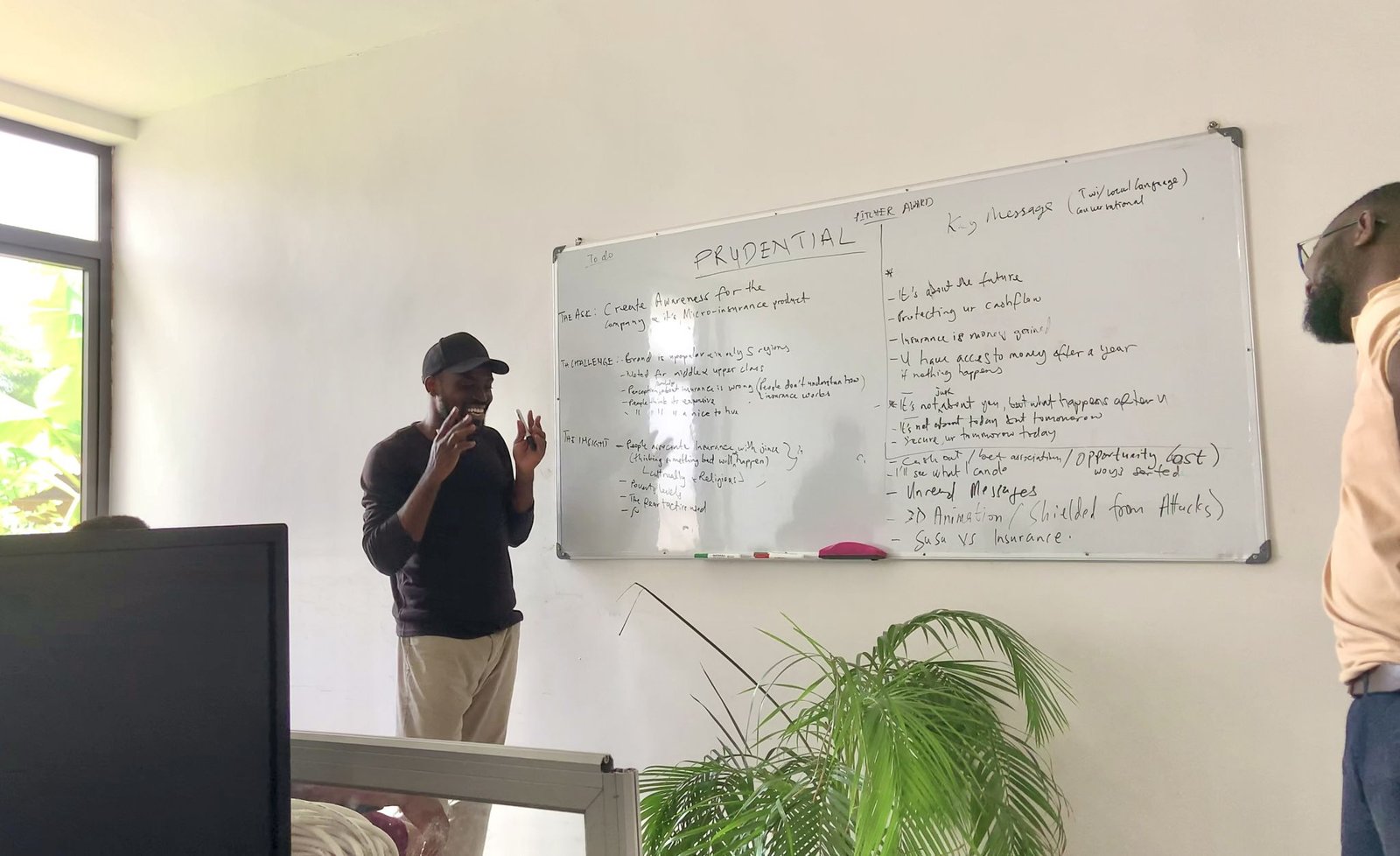
Mekakrawa, an insurance campaign for Prudential Life, solved a different problem the same way. Ghanaians weren’t avoiding insurance because they didn’t understand it — they were avoiding it because “something bad could happen to you” is an uncomfortable sell, and because insurance felt priced for people who weren’t them. So the campaign never made that argument at all. Instead, it ran a string of small, specific, local comparisons: GHC3 can’t buy you gobe, but it can protect your future with Mekakrawa. GHC45 can’t buy you a house, but it can. Exact numbers, tied to things people actually buy every week — not abstract fear, just an honest reframe of what a few cedis is really worth. It won 5 Pitcher Awards in 2024.
Neither idea would have survived being written somewhere else. They only exist because someone understood, specifically, what a blue kiosk means as an address, or what three cedis actually buys at a roadside stall in Accra.
That’s the real argument underneath this year’s jury list, and it’s worth stating plainly: cultural specificity isn’t a limitation the Ghanaian ad industry has to overcome to compete globally. It’s the actual asset. The work earning global recognition right now isn’t winning despite being specifically, locally Ghanaian. It’s winning because of it.
The confidence was never missing. The seat was.
None of this means the work has changed all that much. Ghanaian creatives have been building sharp, specific, culturally fluent campaigns for years — the kind of instinct you can’t fake and can’t outsource. What’s changed is who’s now sitting at the table when the industry decides what “world-class” gets to mean.
That’s worth remembering the next time a brief asks for something more “internationally recognizable.” The instinct to sand off what’s specific, in the hope it travels further, usually produces the opposite of what actually wins. The work that travels is the work that knows exactly where it’s from.